

Key Moments
Cromwell's Transition to Veganism
James Cromwell became vegan shortly after filming Babe due to the emotional impact of working closely with animals.Extensive Animal Use in Babe
The film used nearly 1,000 animals, providing Cromwell a unique, personal encounter with farm animals.Movie's Influence on Viewers
Babe changed viewer perspectives on animals as individuals rather than food.Long-term Animal Advocacy
Cromwell's experience led to decades of activism including roles with PETA and animal rescue.James Cromwell had already spent years avoiding meat when he arrived in Australia to play Farmer Hoggett in Babe. But it took only two days on set for the experience of working closely with the movie’s animals to push him further.
In a 2025 interview with The Guardian, Cromwell recalled breaking for lunch before the rest of the crew after spending the morning working with the film’s animal cast.
What he saw on the table made the contradiction difficult to ignore.

“All the animals I’d worked with that morning were on the table,” Cromwell said, describing meat that had been prepared for lunch. “That was when I decided to become a vegan.”
For Cromwell, the moment wasn’t the beginning of his concern for animals. It was the next step.
He had already stopped eating meat years earlier
Cromwell has said his relationship with meat began changing around 1975, after riding a motorcycle through Texas and encountering feedlots filled with cattle.
In later interviews, he described seeing animals stretching across the landscape and coming away feeling that he no longer wanted to participate in the system. He eventually became vegetarian, years before Babe entered his life.
Then came a movie centered on a pig who was expected to become food.
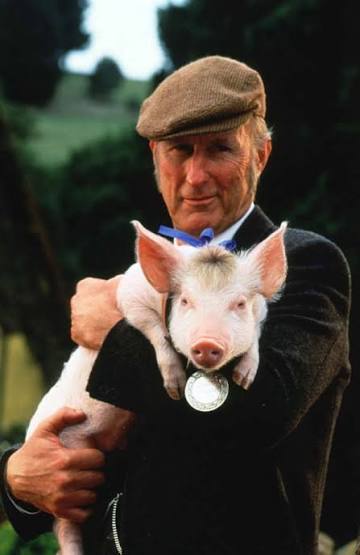
In Babe, Cromwell’s Farmer Hoggett initially sees the young pig much as the surrounding farm does: as an animal with a predetermined role. But Babe repeatedly defies those expectations, eventually learning to herd sheep and earning Hoggett’s affection and respect.
Behind the scenes, Cromwell was spending his days surrounded by the real animals used to create that world.
And there were a lot of them.
Babe used nearly 1,000 animals
According to American Humane’s production report, 970 animals were involved in the film, including 550 sheep.
Forty-seven piglets were used to portray Babe, while nine dogs played Fly, the border collie who helps raise him. The production also combined live animals with animatronics and computer-enhanced sequences. More than 50 animal handlers worked on the movie, and training began long before filming.
That gives Cromwell’s lunch-break realization another layer.
These weren’t abstract animals he had seen briefly from across a field. He had been spending his working days alongside pigs, sheep, dogs and other animals—watching them learn, respond to trainers and display distinct behaviors.
Then some of the same species appeared as lunch.
Cromwell later described the experience even more simply: working with the animals made him confront the difference between seeing them as individuals and seeing them as food.
The movie changed some viewers, too
Cromwell wasn’t the only person who came away from Babe looking at animals differently.
He told The Guardian about one mother who complained that the movie had affected her relationship with her daughter. The two had previously eaten Big Macs together, but after seeing Babe, the daughter no longer wanted to eat animals.
It’s easy to understand why.
The movie never functions like a lecture about veganism. Babe is simply given a personality, relationships, fears and desires—and the audience is invited to care about what happens to him.
That can create an uncomfortable question once the movie ends:
Why do we so easily recognize individuality in one pig while treating other pigs primarily as food?
For Cromwell, that question didn’t stay inside the theater.
It became decades of animal advocacy
His decision on the set of Babe was not a temporary reaction.
Cromwell went on to become a prominent animal-rights advocate and honorary director of PETA. His activism has included campaigns involving animals used in laboratories, factory farming and plant-based food access.
And nearly three decades after filming Babe, the story came full circle.
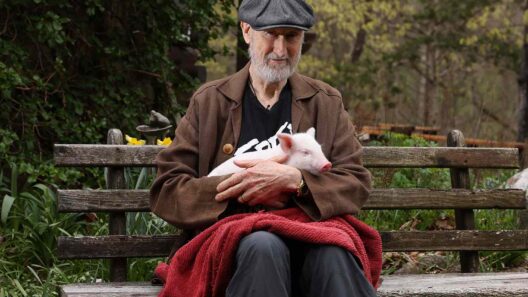
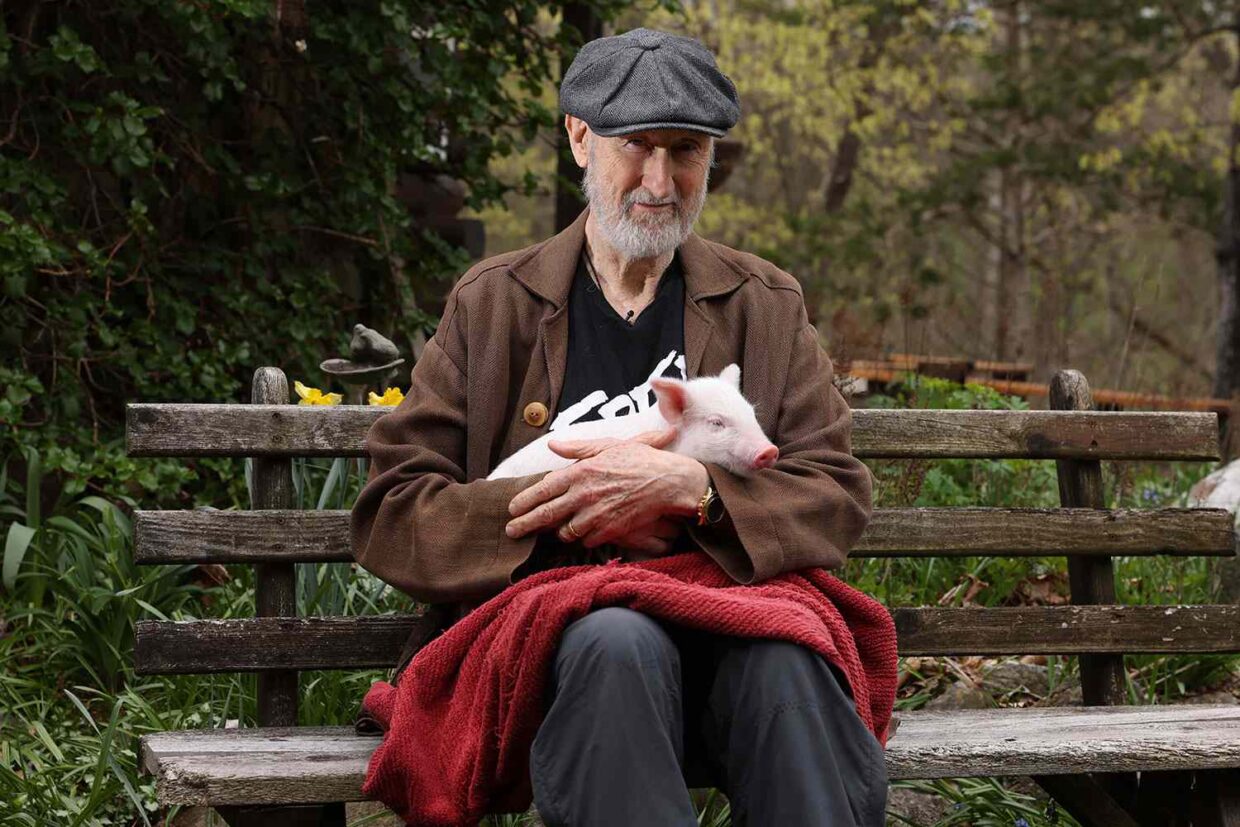
In 2023, Cromwell helped a rescued piglet who had fallen from a truck transporting him to be fattened for slaughter. Cromwell named him Babe.
The pig was eventually taken to sanctuary. Cromwell said that experiencing pigs’ intelligence and personalities while making the film had changed both his life and the way he ate.
His advocacy has continued since then. As recently as July 2026, Cromwell urged a Virginia county fair to end an event in which children chase and grab piglets, again pointing back to what Babe taught him about pigs as sensitive individuals.
A movie about a pig became something much bigger
Thirty years after Babe, Cromwell’s story remains striking because there wasn’t some complicated nutritional argument behind his decision.
He spent time with animals.
Then he saw animals like them being served as food.
For him, the distance between those two things suddenly disappeared.
Most people never meet the individual cow behind a hamburger, the pig behind bacon or the chicken behind a plate of wings. Our food system makes that separation remarkably easy.
Babe briefly removed it.
For James Cromwell, two days were enough.
Sources: The Guardian interview with James Cromwell; American Humane’s Babe production report; interviews with Cromwell regarding his transition from vegetarianism to veganism; PETA reporting on Cromwell’s animal advocacy and the rescued piglet named Babe.